What Local Conditions Do
Most houses in Lehigh Acres went up between 1970 and 2006, with the bulk of the stock dating to the 1980s and 90s across the eighteen named areas that make up this community. That matters for noise because a door built or installed in that window is now 20 to 50 years old, and the hardware wears in a predictable order: rollers first, then the bearings at the end of the torsion shaft, then the spring itself. The mild temperate climate here doesn't put the extreme thermal swings on a door that you'd see up north, so you don't get the same frozen-stiff-in-winter complaints. What you do get is steady humidity working on unlubricated metal year-round, which turns a quiet roller into a grinding one faster than dry climates would. A door that sounds fine in January and starts complaining by June is usually just telling you the grease finally gave out, not that something broke overnight. Age plus humidity is the two-part story behind almost every noise call in this area, and it's worth knowing which part you're dealing with before you start replacing parts.
What to Check
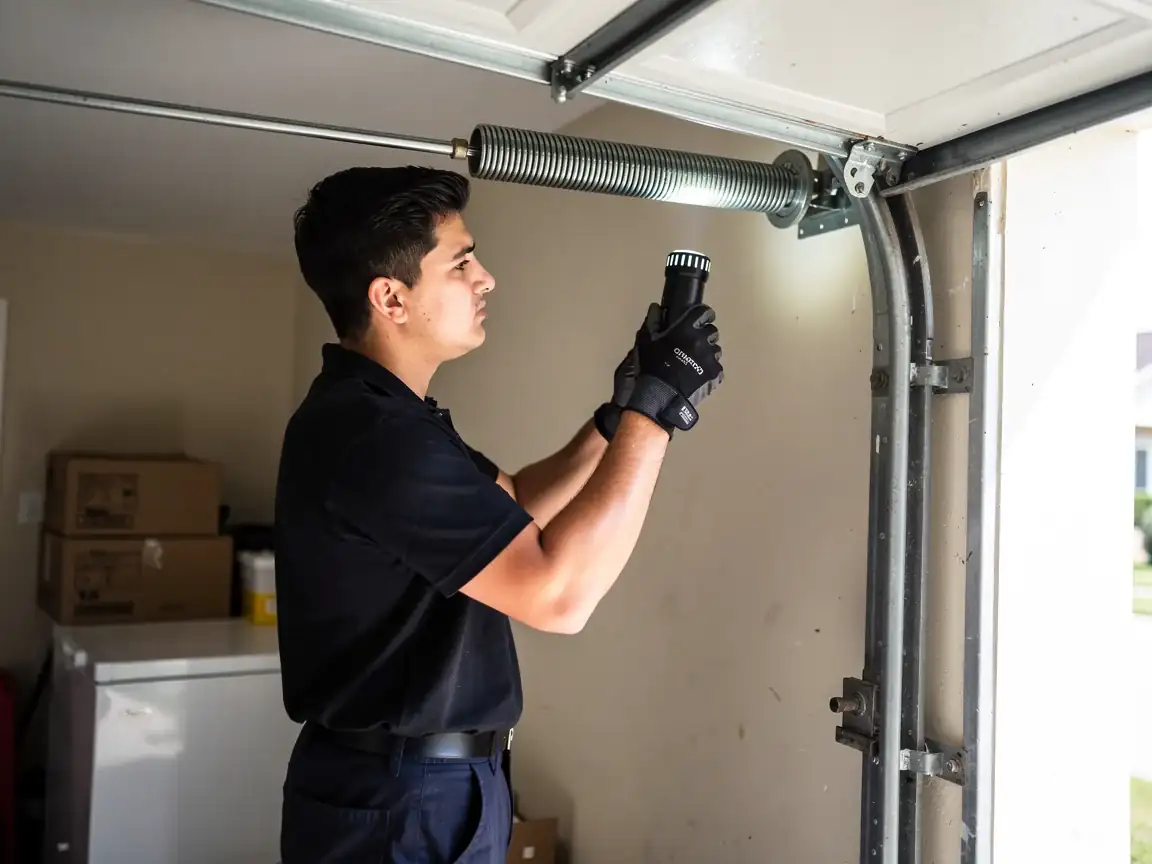
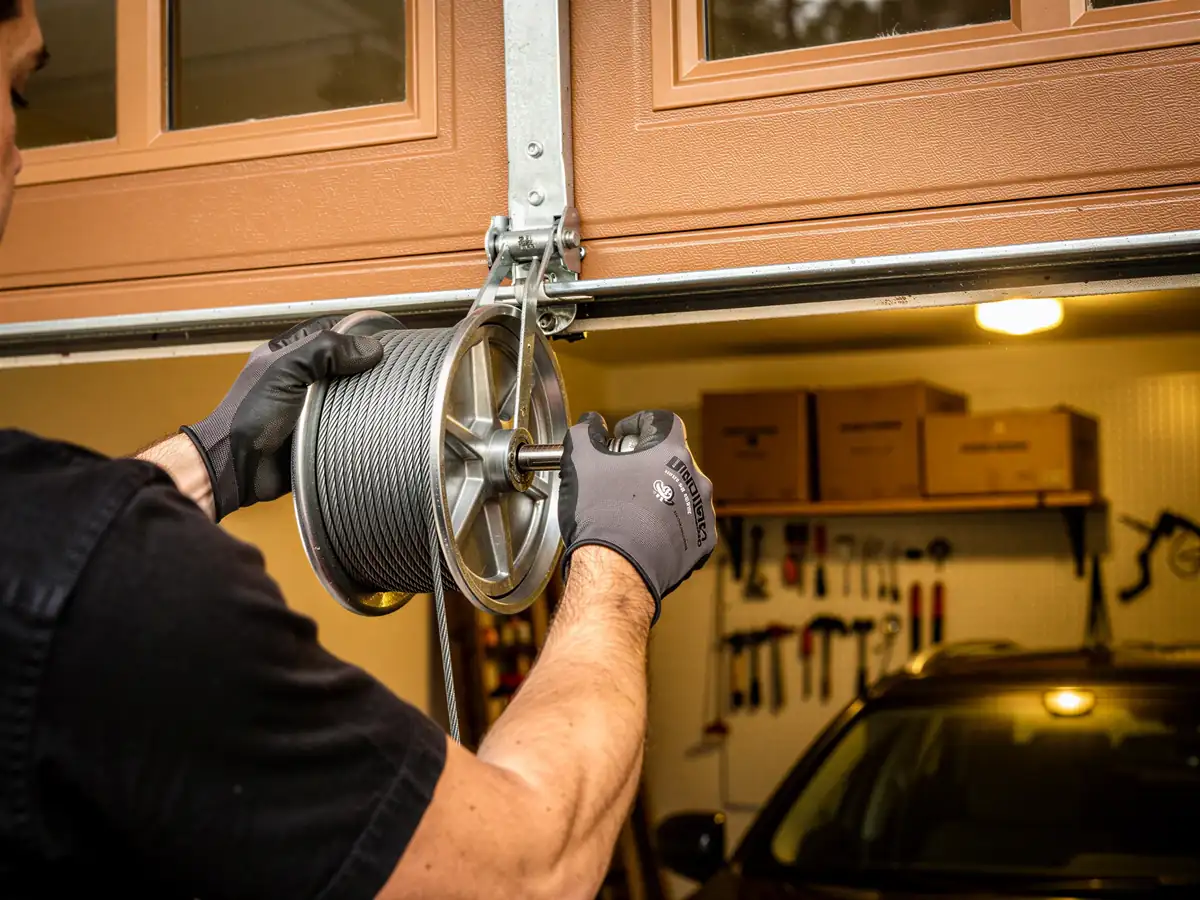
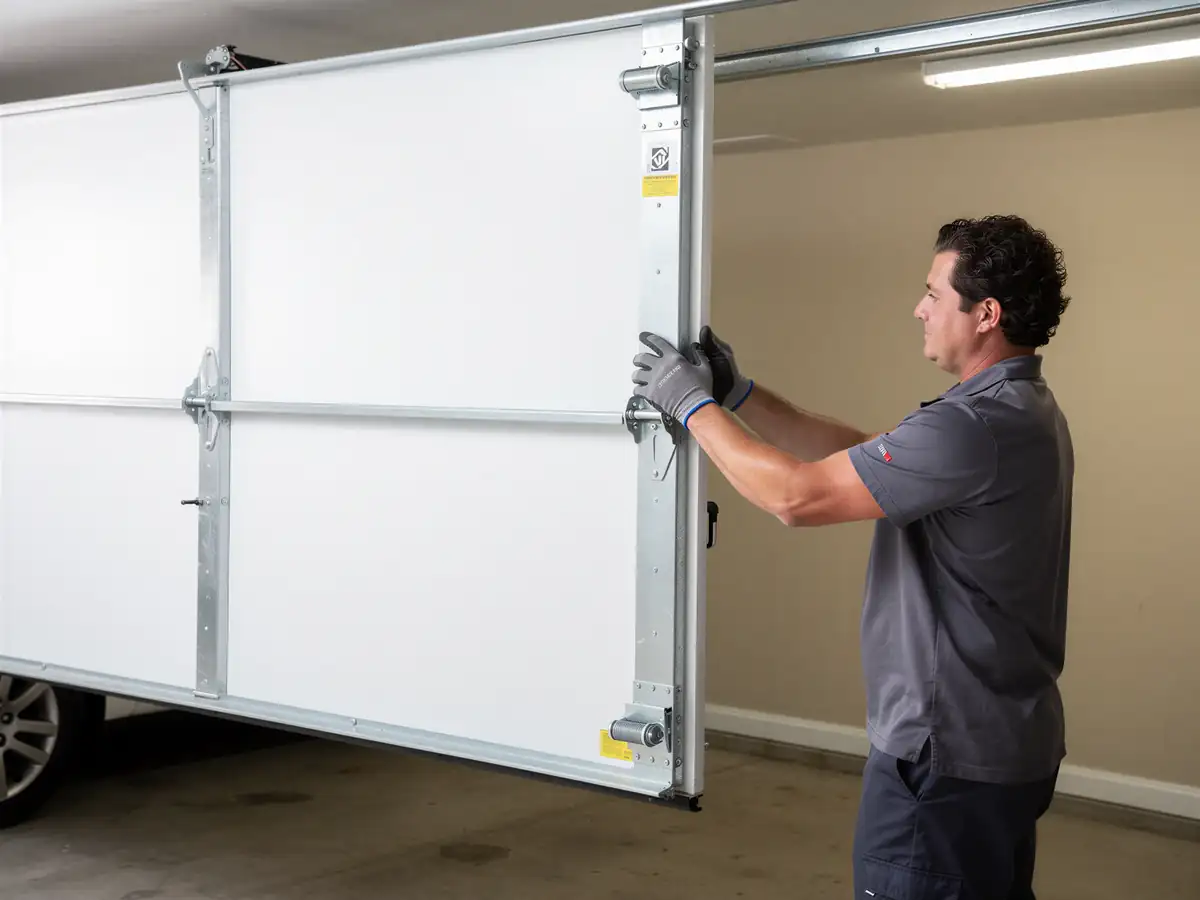
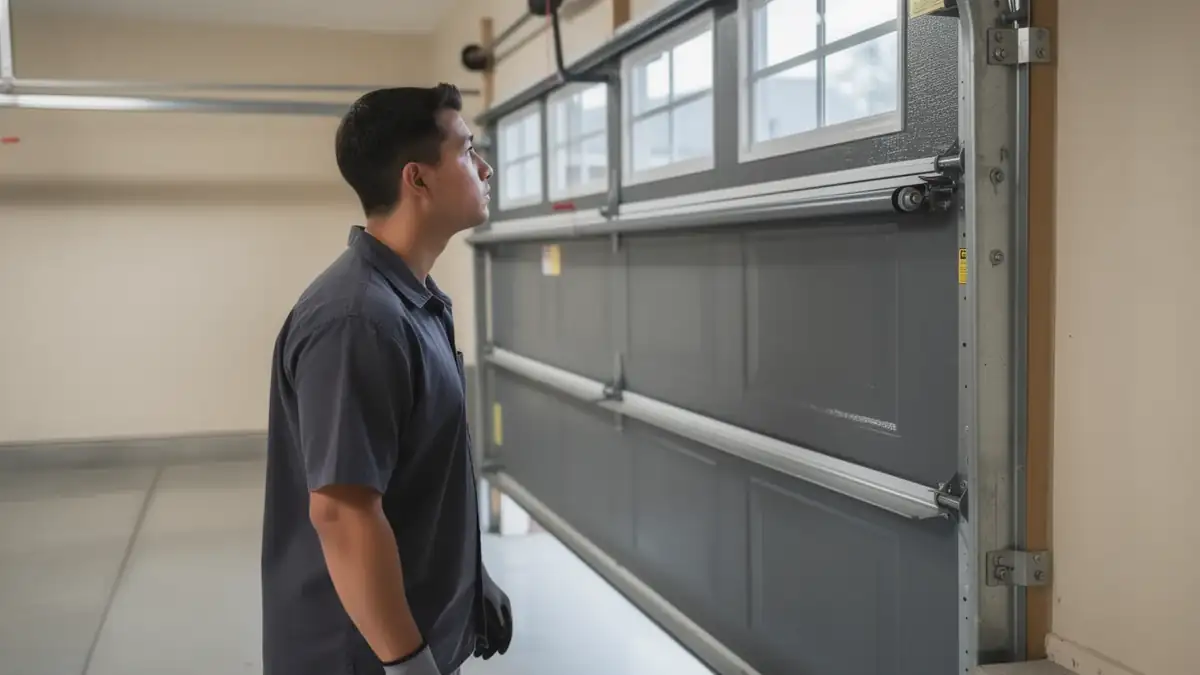
Start at the rollers. On a door installed in the 80s or 90s, these are often the original steel rollers, and steel-on-steel with no nylon sleeve is loud by design once the factory grease dries out. Run the door and listen for where the noise peaks on the track - if it's consistent the whole run, it's rollers or track alignment. If it's a single loud pop near the top or bottom, check the hinges between panels; on older doors those hinge pins wear oval instead of round and start knocking. Next, look at the bottom bracket and the cable where it meets the drum - frayed strands catching on the drum make a rhythmic click, not a grind. Last, check whether the noise happens only when the door reverses direction near full open or full close; that's almost always the opener's drive gear, not the door itself, and it's a different repair entirely. Write down where in the cycle the noise happens before you call anyone. That one detail tells a tech more than a description of the sound ever will.
What Is Going On
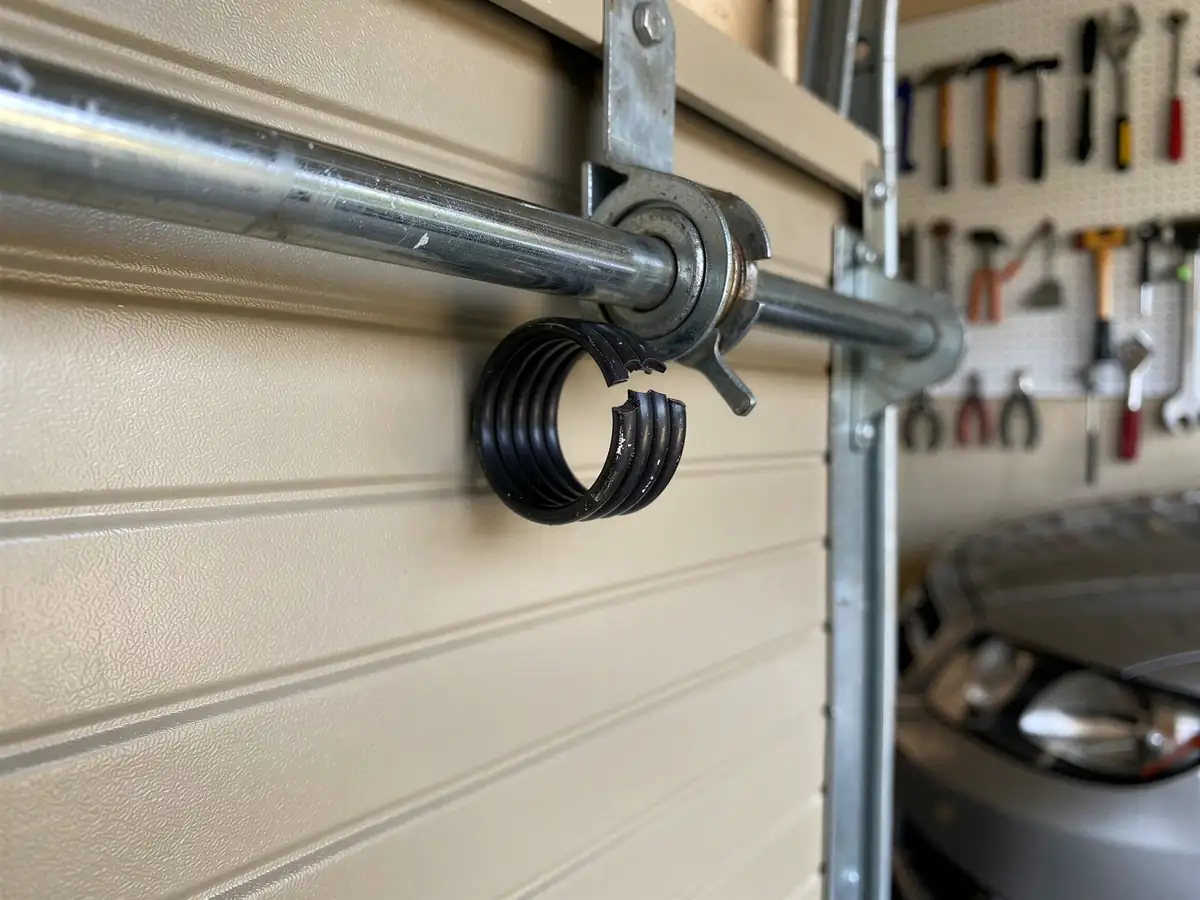
Put together, the noise on a Lehigh Acres garage door is almost always a hardware-age story, not a mystery. Housing here is split across areas with similar build windows - whether you're closer to Gateway, the stock a few miles in any direction tends to date from the same few decades, so the same wear patterns show up across the service area. The honest limitation: if your door is on the older end of that 1970-2006 range and the noise is coming from inside the torsion spring assembly itself rather than the rollers or hinges, that's not a lubrication fix - the spring and shaft hardware on doors that age often need full replacement rather than a tune-up, because matching 30-to-40-year-old parts isn't realistic. A tech can tell you which situation you're in during a service call; the home address itself doesn't change the physics, but the age bracket of the house usually points straight at the answer.