What Local Conditions Do
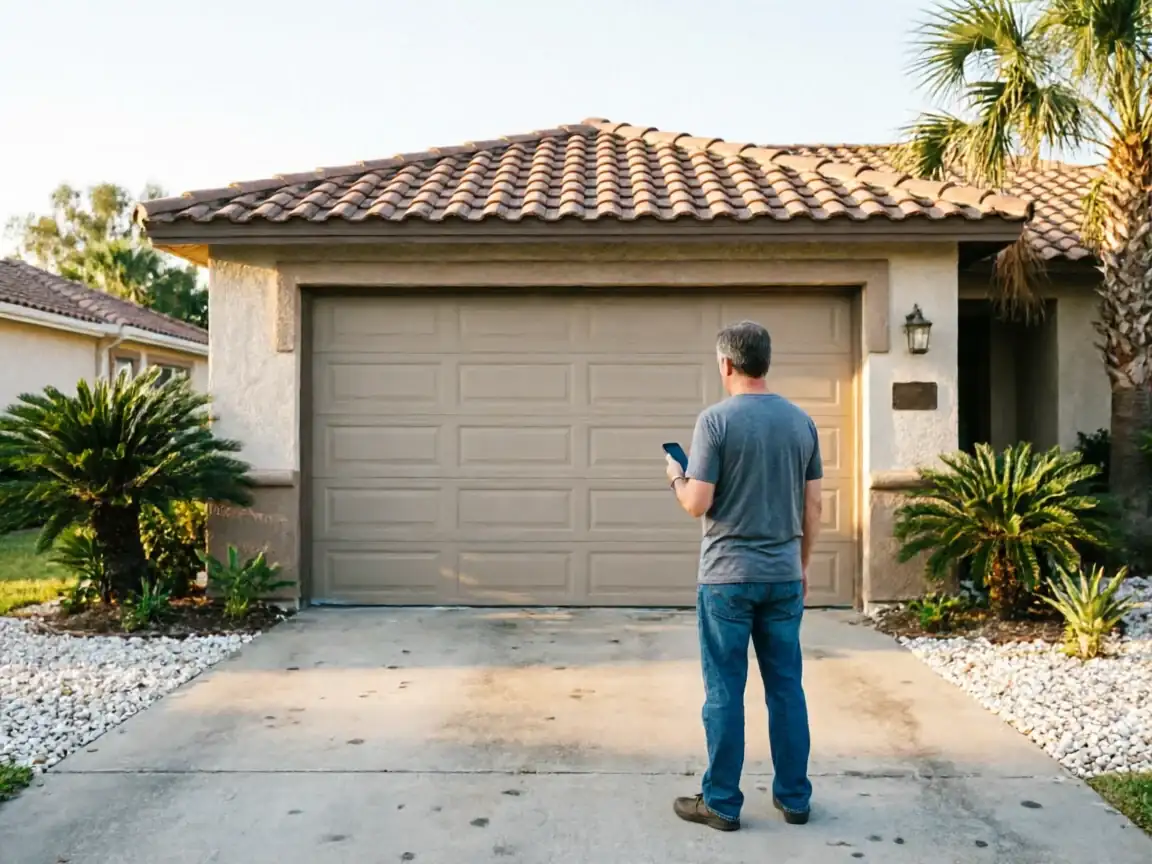
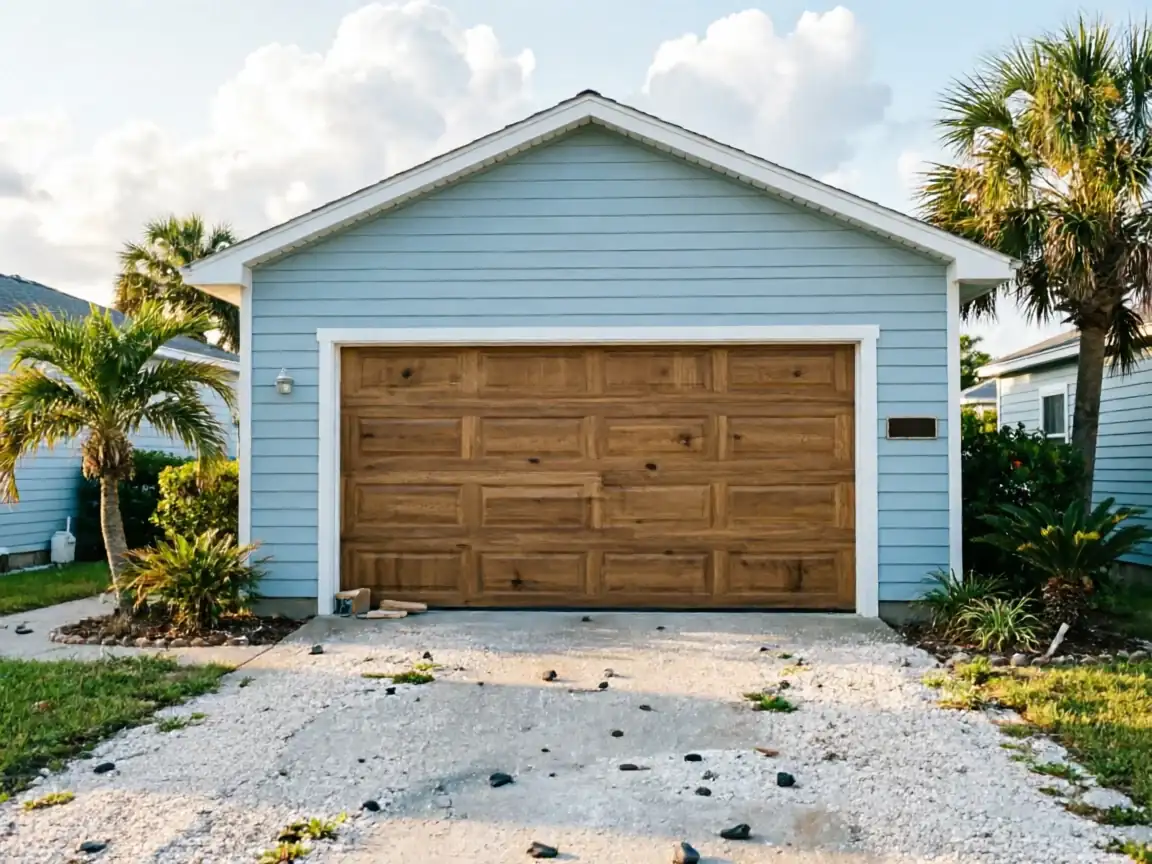
Most of the garage doors we work on here were hung when the house went up, and across Lehigh Acres that means somewhere between 1970 and 2006, with the median landing around 1986. That's the track hardware we're dealing with: original steel brackets, original roller stems, often never touched since the day the door was installed. A door that's gone 35-plus years without a track adjustment is a door that's due for one, whether anyone's noticed trouble yet or not.
The climate here is mild temperate, so you're spared the freeze-thaw heaving that cracks concrete pads and warps track mounts up north. That's the good news. The bad news is Lehigh Acres runs humid most of the year, and humidity does its own quiet damage - it corrodes the lag screws holding the track brackets to the jamb, and it lets wood framing swell and shrink just enough, season after season, to work those screws loose. A loose bracket lets the track flex sideways under the door's weight, and a flexing track is a door that eventually jumps off it.
Across the named sections - Gateway, Buckingham, Olga, Alva, and the rest - the pattern repeats: 1980s and 90s construction, original track hardware, decades of humidity working on the fasteners nobody ever looks at.
What to Check
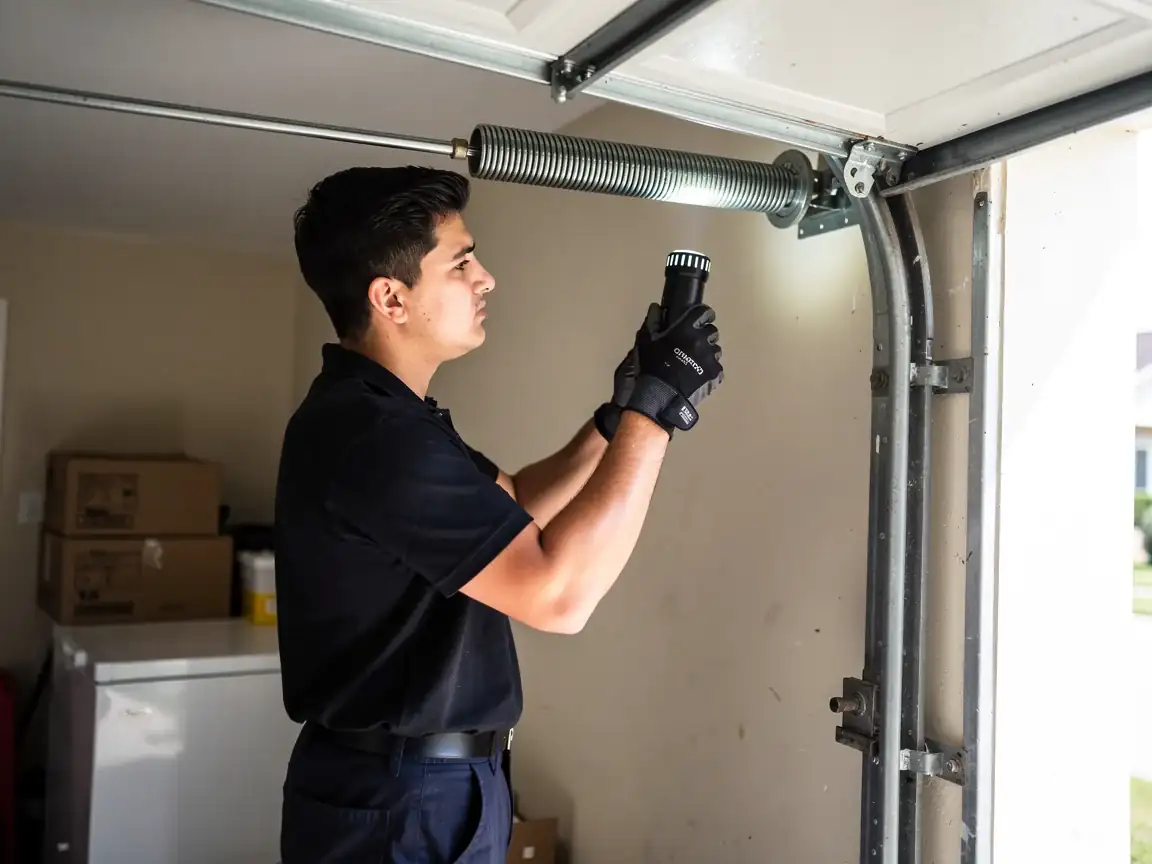
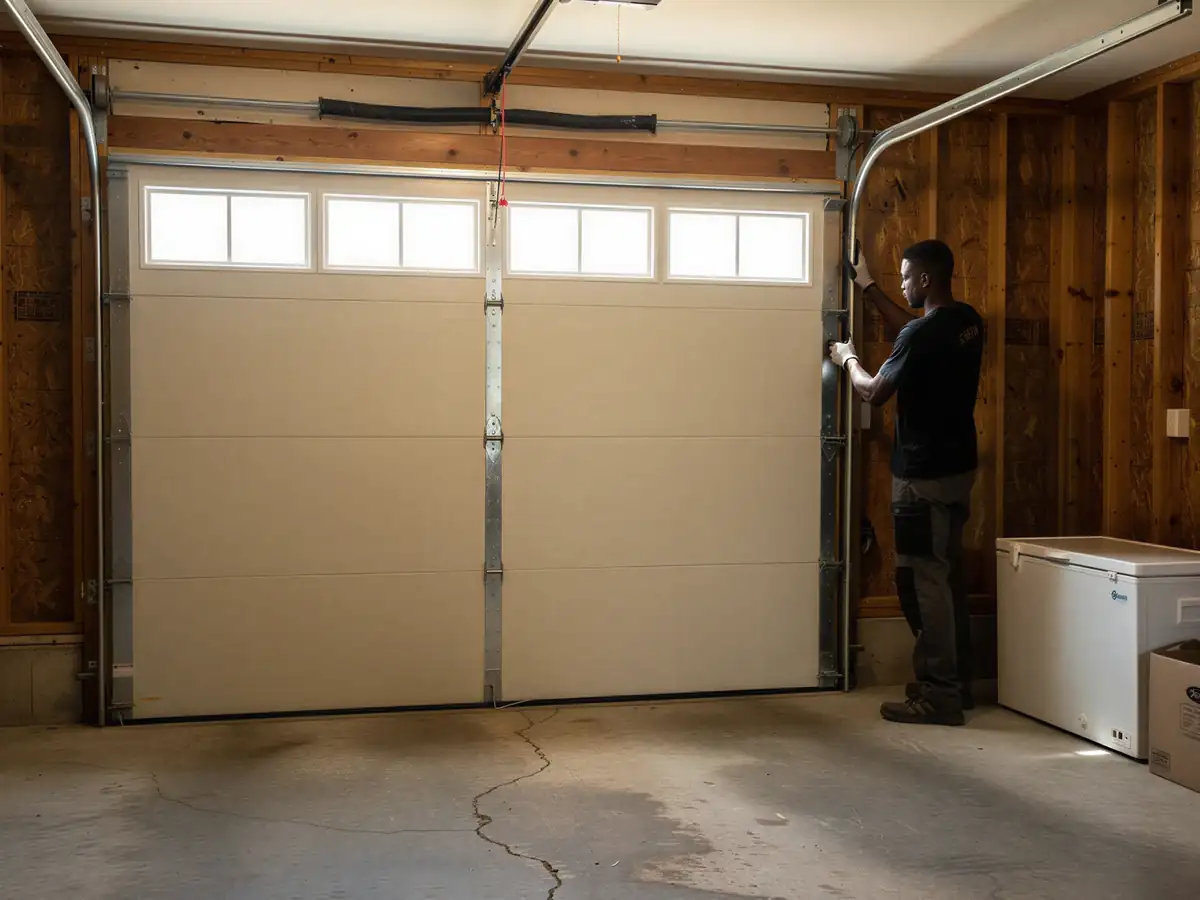
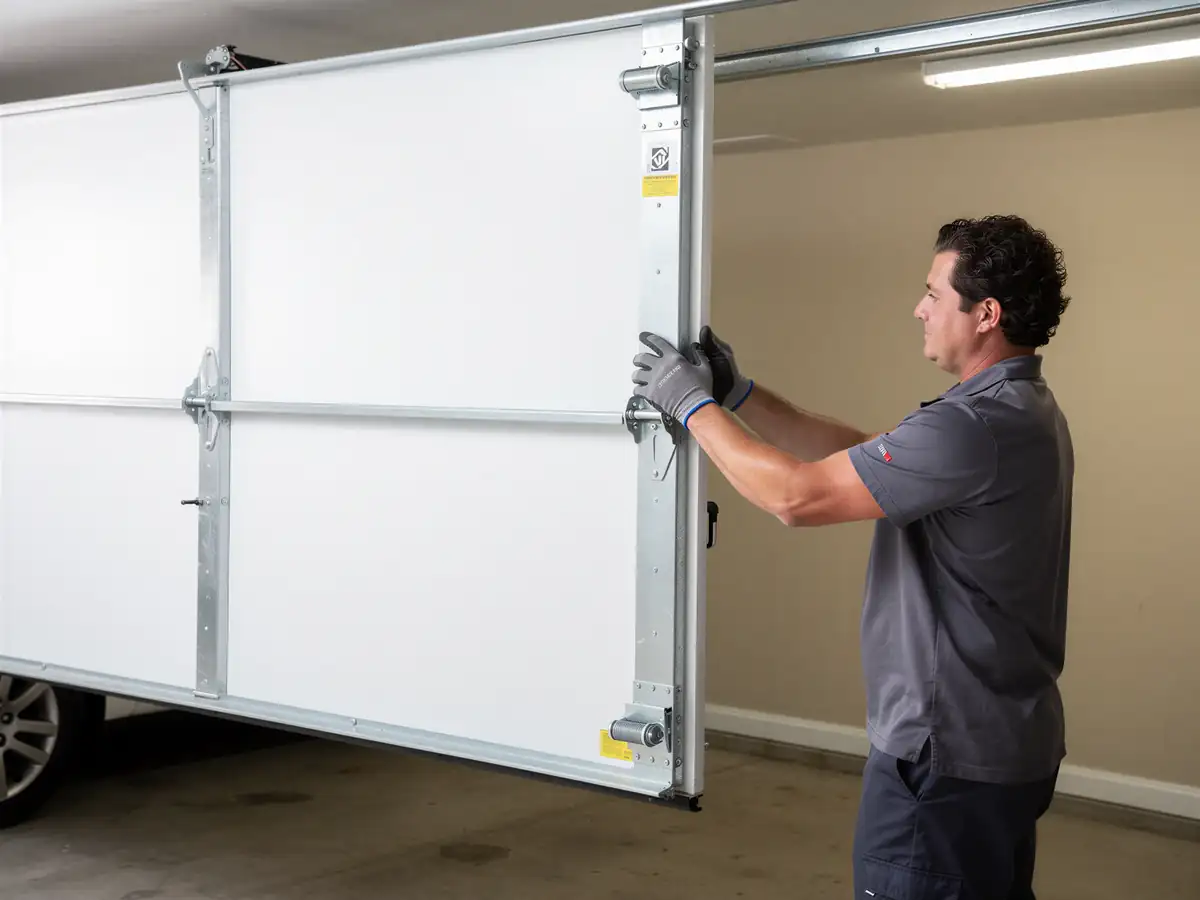
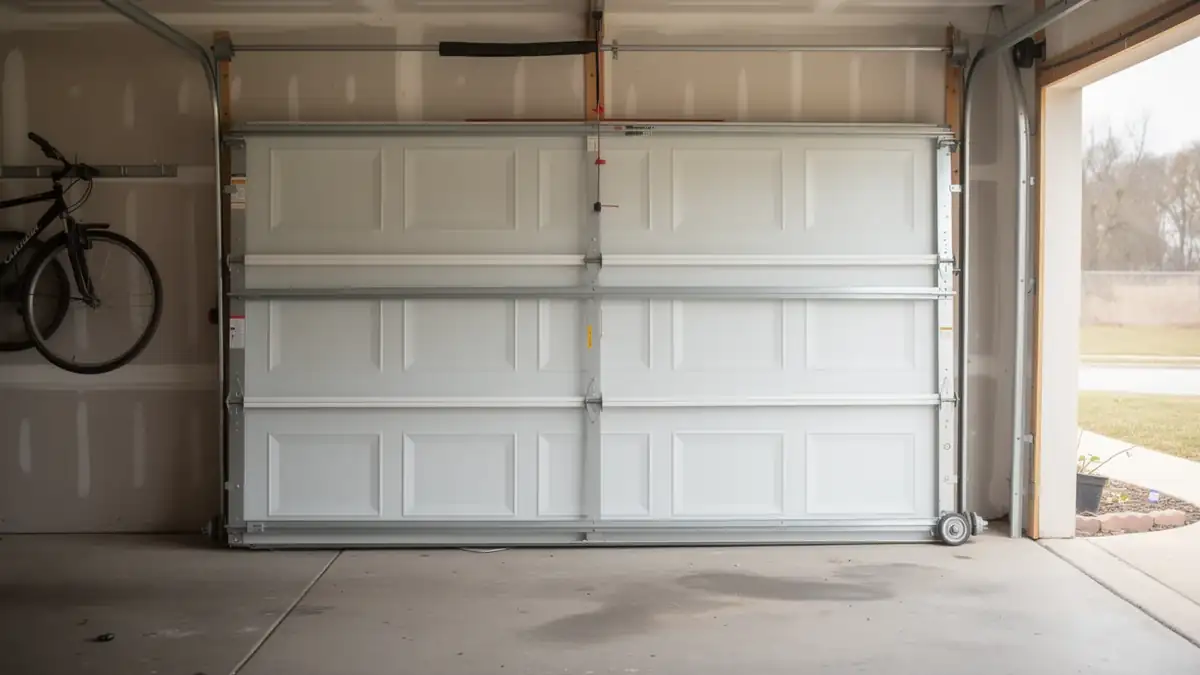
Start at the brackets, not the door. Walk the track from the floor up and check that every mounting bracket is still tight against the jamb - a bracket you can wiggle by hand is a bracket that's already let the track move. Look for rust bleeding out from under the bracket plates; on a house from the 1980s or 90s that's often the first visible sign the screws have corroded enough to lose their grip in the wood.
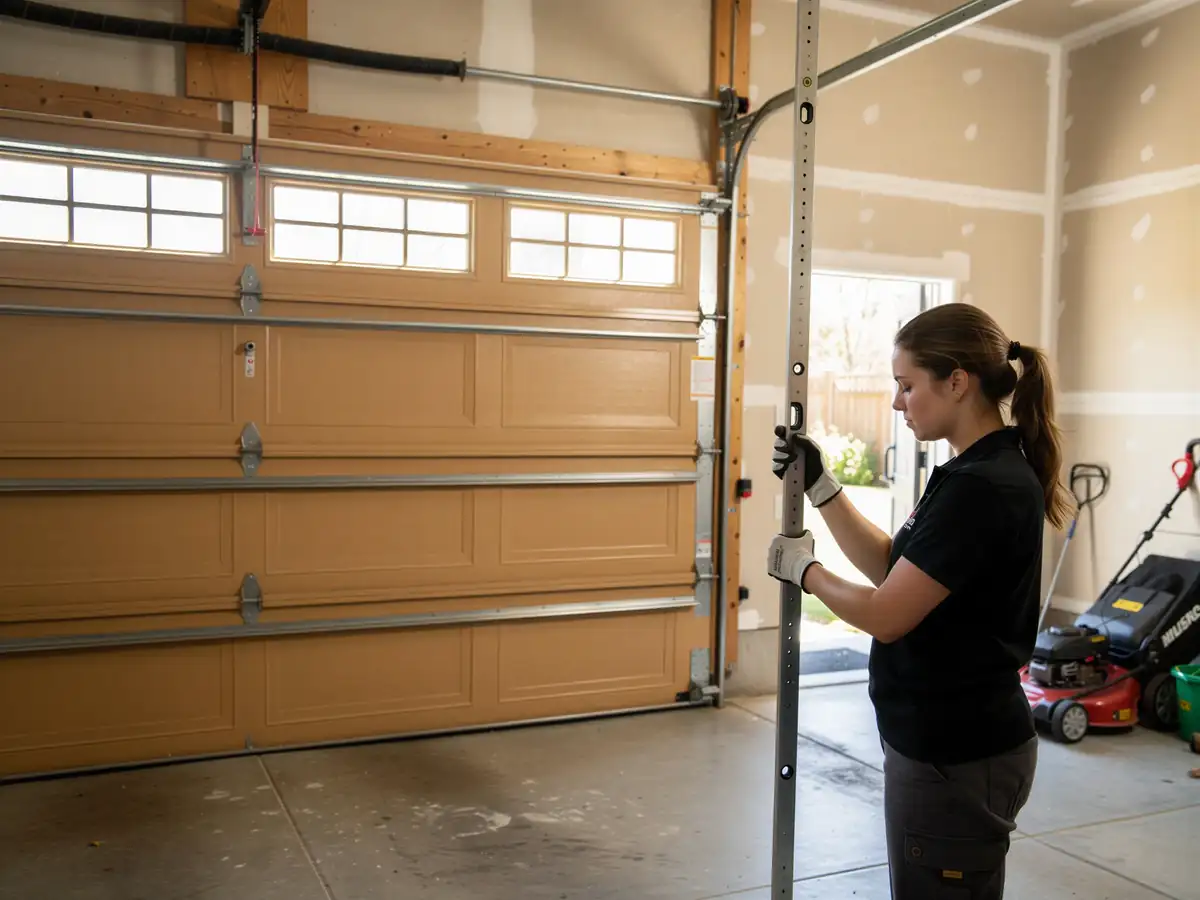
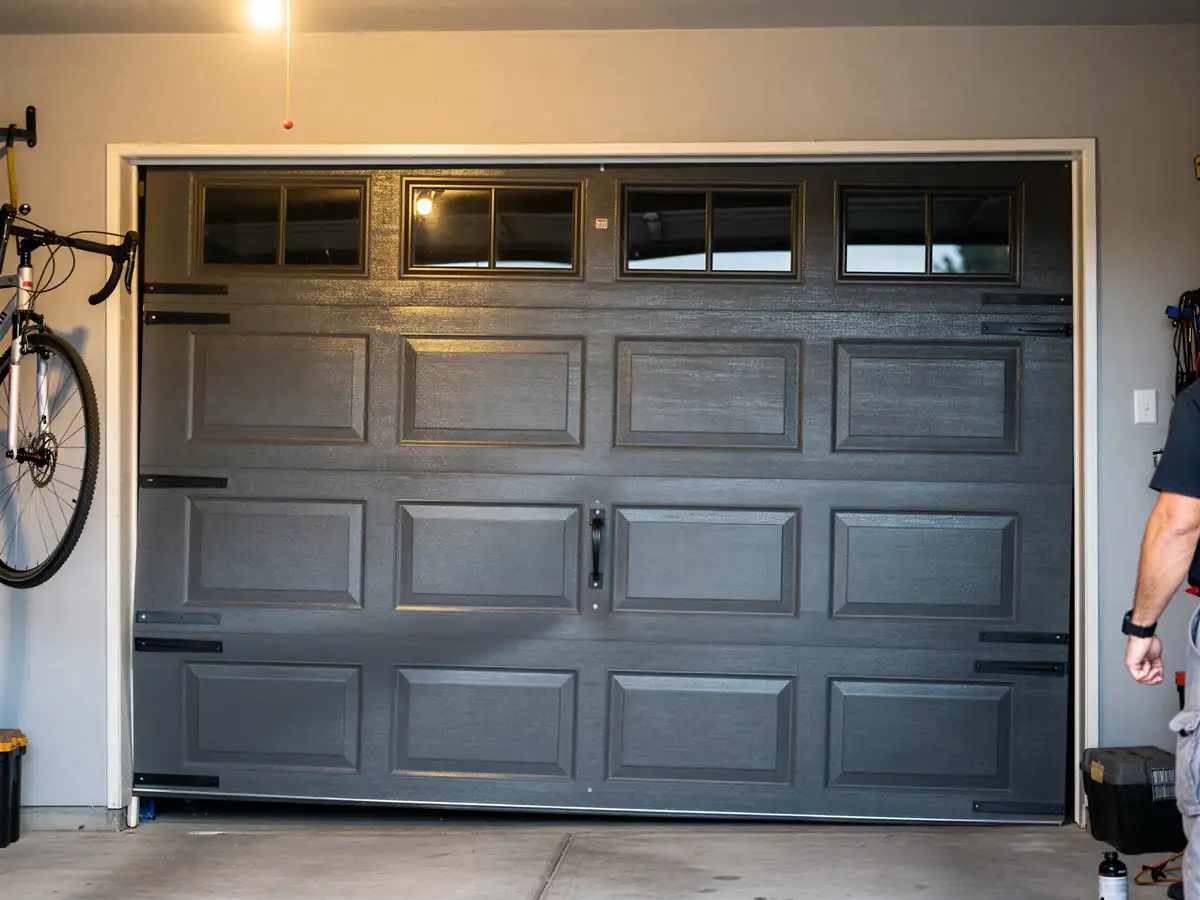
Next, sight down the vertical track on both sides. It should run dead straight and parallel to the door edge. Any bow, especially near the bottom few feet where the door takes the most abuse opening and closing, means the track itself has been pushed out of true - usually from a loose bracket letting it shift over time.
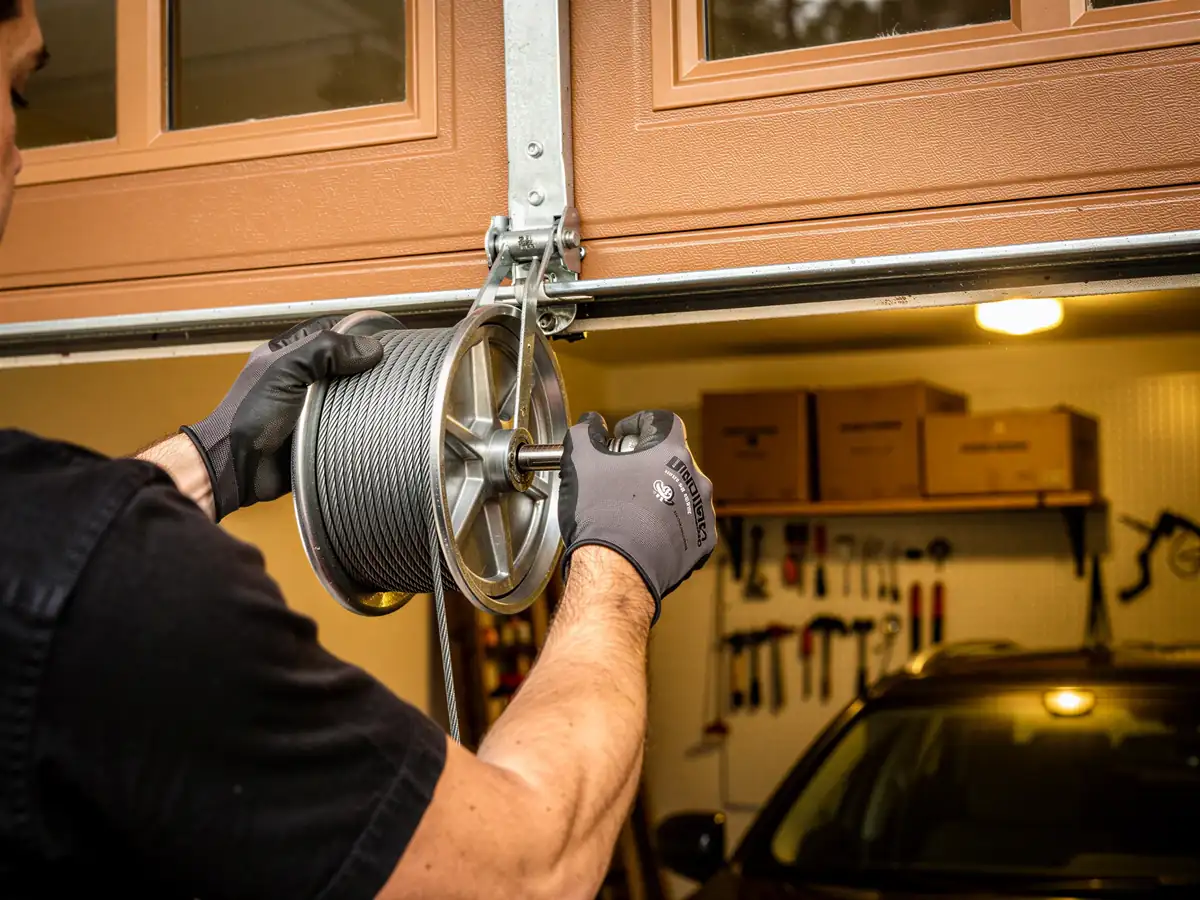
Check the rollers too. On doors from that same building era, steel rollers without nylon tires wear a groove into themselves, and a worn roller rattles loose in a track that was otherwise fine. If the door is noticeably louder than it used to be, or it hesitates and jerks a few inches into the first foot of travel, that's usually a roller or a bracket, and it's worth looking before it becomes a door that's fully derailed.
What Most People Get Wrong
The first instinct is almost always the opener
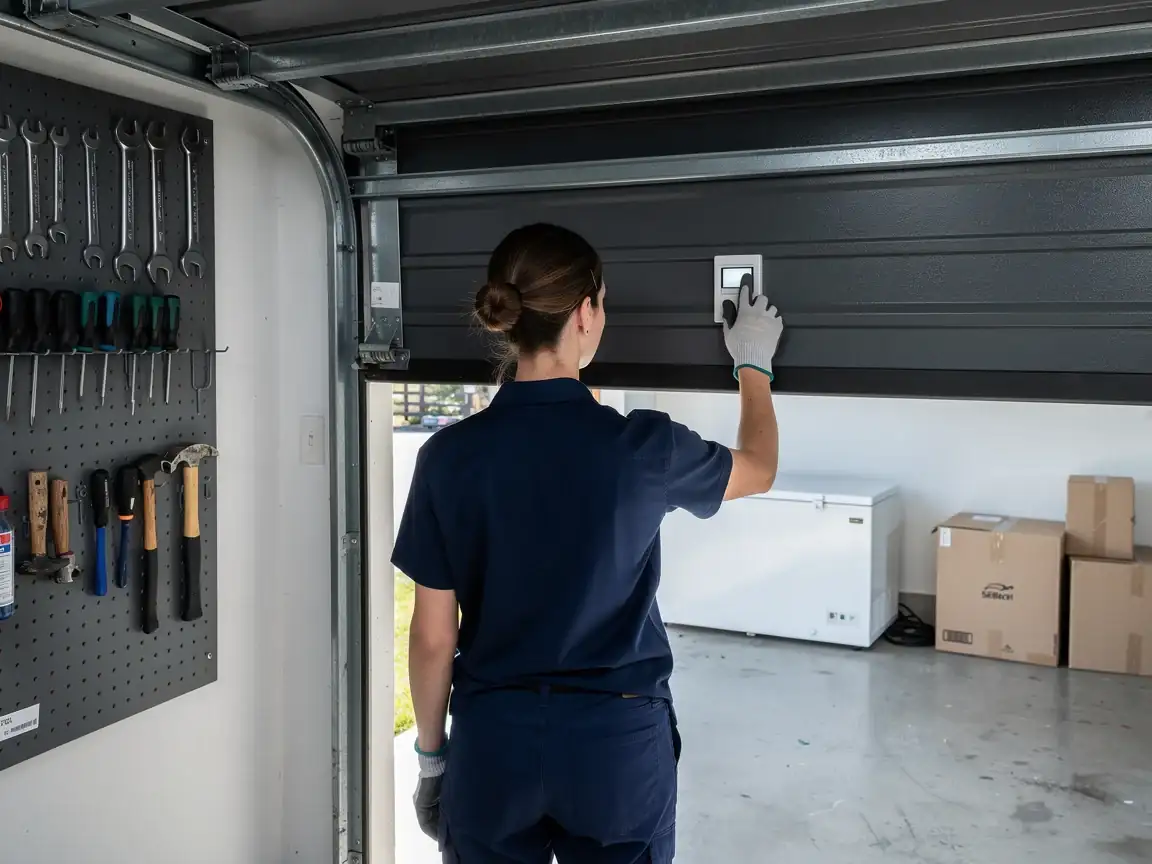
The door stutters or won't close all the way, so people reach for the remote's force settings or start fiddling with the sensors. On a lot of the doors we see in Lehigh Acres - older stock, original hardware - the opener is innocent. It's doing exactly what it's told, and what it's told includes pulling a door whose track has drifted out of alignment.
The second mistake is tightening the loose bracket and calling it done
A bracket that's worked itself loose over 30-plus years of humidity cycling has usually also let the track shift position slightly. Snugging the bolt back down without re-squaring the track against the jamb just locks in the misalignment - the door will ride rough until something gives again, usually sooner than before.
Here's the honest limit
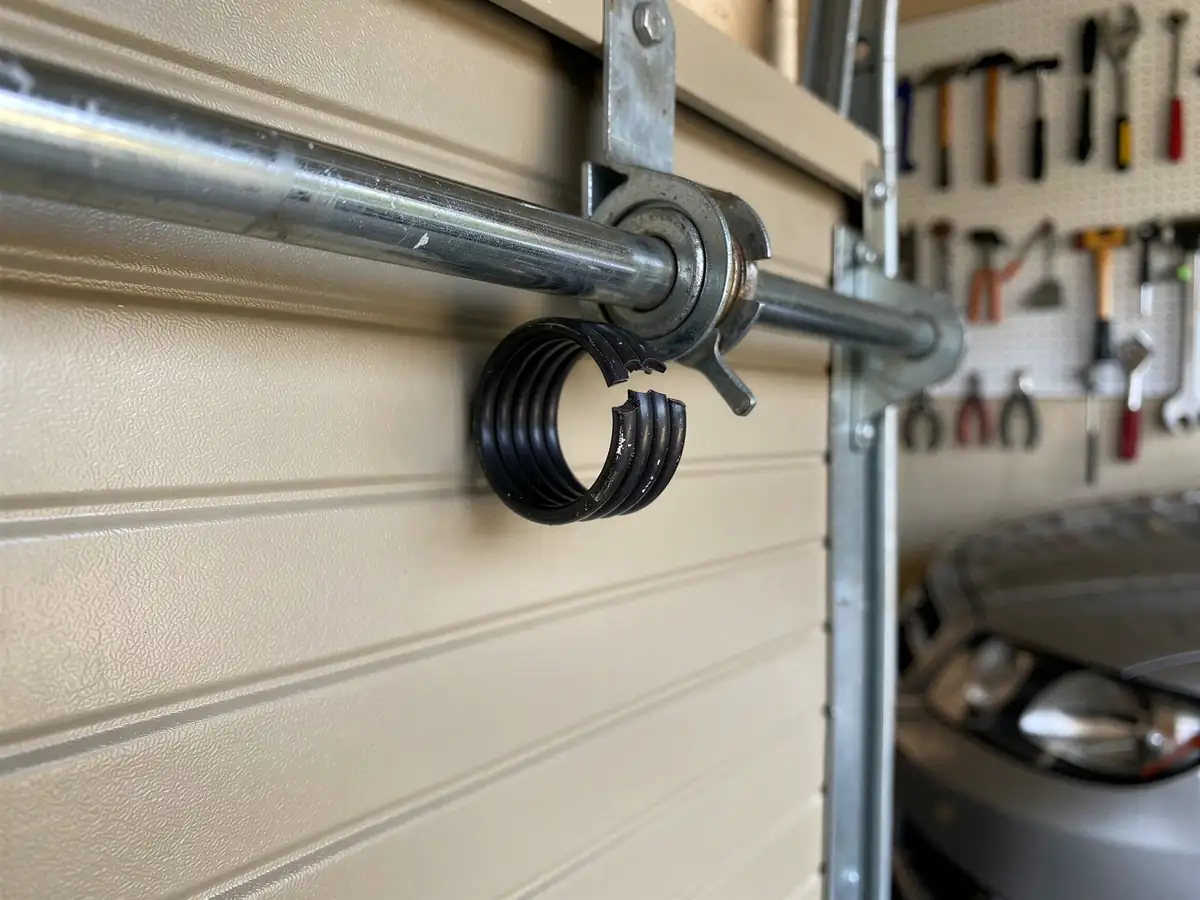
We don't recommend homeowners pull the track back into alignment themselves if the door uses torsion springs. Those springs hold real tension, and a track that's already shifted can bind unpredictably when you start loosening fasteners near it. That's a call-a-pro job, not a Saturday-afternoon job, and we'll say so plainly rather than talk you into believing otherwise.
What Is Going On
Mechanically, a door comes off track one of two ways. Either a roller rides up over the edge of the track rail because the rail has bowed or spread, or the track itself has pulled away from the wall far enough that the roller simply runs out of rail to follow. Both start the same way: a mounting bracket that's lost its grip.
In a house built in the 1980s or 90s, which describes most of the stock in and around Lehigh Acres, those brackets were lagged into framing that's spent three or four decades expanding and contracting with the area's humidity. Nothing dramatic happens in any one season. It's cumulative - a sixteenth of an inch of play this year, a little rust undermining the threads next year, until one day the door binds going up, someone forces it with the opener, and a roller pops the rail.
The fix almost always starts at the bracket, not the roller or the track rail itself. Re-anchor the hardware solidly, re-square the rail, and the rest of the system usually settles back into normal operation. Where the rail itself has actually bent, replacing that section beats trying to bend it straight again - a straightened rail rarely holds true for long.